How Much Money Should You Save Before Moving to Central Florida?
Moving to Central Florida involves more than paying a moving company and putting money down on a home.
You may also need cash for closing costs, inspections, insurance, travel, temporary housing, utility deposits, repairs, and the first few weeks of getting settled.
So, how much should you save?
For a buyer purchasing a home around $350,000, a practical savings target may fall somewhere between $30,000 and $60,000 or more, depending on the loan, down payment, moving distance, and emergency savings already in place.
That does not mean every buyer needs $60,000 before moving. Some eligible buyers can purchase with little or no down payment. It also does not mean having just enough to close is comfortable.
The right number is the amount that lets you buy the home, complete the move, and still have money available afterward.
The Approval To Keys Method helps you build that plan before you start making offers. It connects your financing, savings, home search, inspections, moving timeline, and closing into one clear process.
Start With Five Separate Savings Buckets
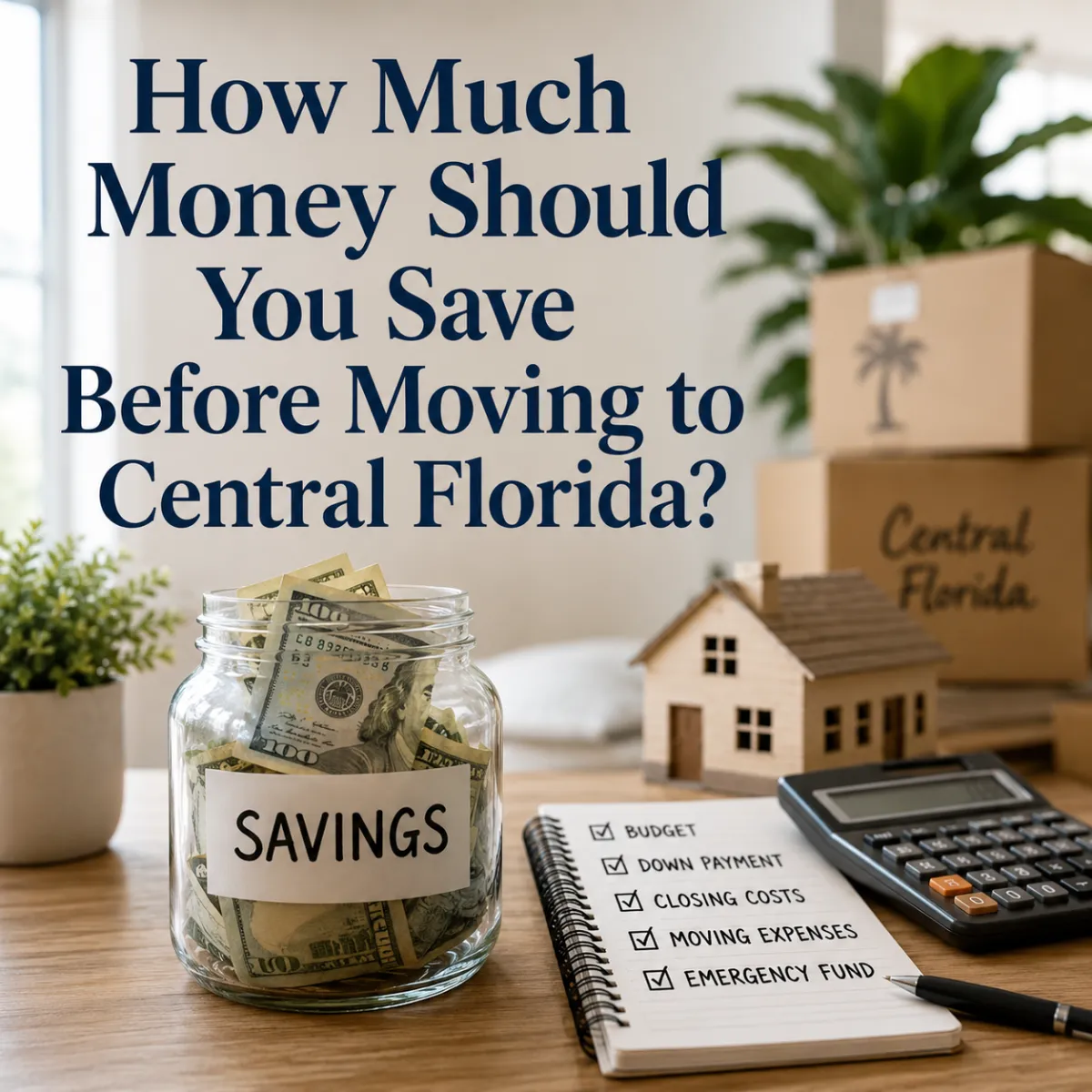
Instead of choosing one large savings goal, divide your money into five categories:
Down payment
Closing costs
Home-buying expenses before closing
Moving and setup costs
Emergency savings after closing
This makes the goal easier to understand.
It also helps prevent one of the most common buyer mistakes: using every available dollar for the down payment and having nothing left when the air conditioner needs service or the moving truck costs more than expected.
The Consumer Financial Protection Bureau recommends subtracting moving costs, renovations, furnishings, and an emergency cushion from your available savings before deciding how much cash you can use at closing. It suggests keeping roughly three to six months of expenses as an emergency cushion.
The Step-by-Step Approval To Keys Process for Relocating Buyers shows how budgeting fits into the larger home-buying timeline.
How Much Will You Need for a Down Payment?
You do not always need 20% down to buy a home.
Some conventional mortgage programs allow qualified buyers to put down as little as 3%. FHA loans may allow a minimum down payment of 3.5% in many cases. Eligible VA and USDA borrowers may have no-down-payment options.
Here is what several down payments would look like on a $350,000 home:
3% down: $10,500
3.5% down: $12,250
5% down: $17,500
10% down: $35,000
20% down: $70,000
Putting down more can reduce your loan balance and monthly payment. A conventional buyer who puts down less than 20% may also pay private mortgage insurance until enough equity is established.
But a larger down payment is not always the best use of every dollar.
Suppose you have $40,000 saved. Putting nearly all of it into the home may lower your payment, but it could leave you without money for closing, moving, repairs, or emergencies.
That is why your down payment should be decided after reviewing the full move, not by itself.
For a closer comparison of loan types, read Financing Options for Relocating Buyers: FHA, VA, or Conventional?.
Plan for Closing Costs
Closing costs are separate from your down payment.
They may include lender fees, appraisal charges, title services, prepaid interest, recording expenses, initial escrow funding, and other costs connected to the mortgage and property transfer.
The CFPB says closing costs commonly range from approximately 2% to 5% of the purchase price, although the actual amount depends on the loan, lender, property, location, and transaction.
On a $350,000 purchase, that general planning range would be:
2%: $7,000
3%: $10,500
4%: $14,000
5%: $17,500
That is a wide range, which is why early mortgage planning matters.
A lender can prepare an estimate based on your actual loan program, expected price range, credit profile, taxes, insurance, and down payment. You can then adjust your savings target before you start making offers.
Seller credits or lender credits may reduce some upfront expenses, depending on the contract and loan. Those credits are not guaranteed, and they may involve tradeoffs such as a different purchase price or interest rate.
Build your plan around what you can control. Treat possible credits as helpful rather than necessary.
For a closer look at the expenses that can appear before closing, read Understanding Closing Costs in Central Florida.
Keep Money Available Before Closing
Some home-buying expenses happen before you receive the keys.
Earnest Money
An earnest money deposit is money placed with an agreed party under the purchase contract and held until the transaction closes. It is generally shown as a deposit in the mortgage disclosures and may be credited toward the amount due at closing.
The amount and deadlines depend on the contract.
Even when the deposit eventually counts toward your purchase funds, you need to have that money available shortly after your offer is accepted.
Home Inspection
A home inspection helps you understand the property’s condition. It is different from the lender’s appraisal, and buyers generally need to plan for both.
Depending on the property, you may also consider additional evaluations involving:
Roof condition
Heating and cooling systems
Plumbing
Electrical systems
Termites or other pests
Septic systems
Wells
Pools
Mold or moisture
Sewer lines
Not every home needs every inspection.
Still, it is smart to have a separate inspection budget rather than assuming one basic inspection will answer every question.
Appraisal and Lender Charges
Your lender may require an appraisal to estimate the property’s value. The consumer may generally be charged a reasonable appraisal fee, even though a copy of the report must be provided according to applicable requirements.
Ask when these fees are due. Some are paid before closing, while others appear in your closing figures.
Budget for the Actual Move
The distance between your current home and Central Florida can change your savings target by thousands of dollars.
A move from another part of Lake County is very different from a move from Ohio, New York, Texas, or California.
Your relocation budget may include:
Professional movers
A rental truck
Packing supplies
Vehicle shipping
Fuel and tolls
Flights
Hotels
Storage
Pet transportation
Meals during the trip
Time away from work
Temporary housing
You may also face overlapping housing payments if your lease, home sale, and purchase do not line up perfectly.
Poor timing can create mortgage and rent overlap, temporary housing expenses, last-minute moving charges, storage costs, and additional travel.
The guide on How to Time your Move to Avoid Stress and Extra Costs explains why your relocation timeline is also part of your financial plan.
Get written estimates from multiple moving companies before setting your final goal. A general online estimate may not account for stairs, heavy furniture, long-carry fees, storage, packing, delivery windows, or the time of year.
The Complete Moving Checklist for Out-of-State Buyers Relocating to Central Florida can help you organize everything from pre-approval and packing to utilities and moving day.
Prepare for Central Florida Ownership Costs
Moving costs do not stop when the truck leaves.
Your first few months in the home may include expenses that did not exist in your old budget.
Homeowners and Flood Insurance
Homeowners insurance can vary significantly from one property to another. Roof age, construction, property condition, coverage, deductibles, and location may all affect the quote.
Flood insurance may also be required when a financed property is located in a designated Special Flood Hazard Area.
Get property-specific insurance estimates before committing to a home. Do not assume two similarly priced homes will carry similar premiums.
The guide on flood zones and insurance for out-of-state Florida buyers explains why roof age, flood maps, wind mitigation, and property condition should be researched early.
Property Taxes
Do not rely only on the seller’s current tax bill when estimating your future payment.
A Florida homeowner who owns and occupies a home as a permanent residence may qualify for a homestead exemption that can reduce taxable value by as much as $50,000. Eligibility and applications are handled through the county property appraiser.
Taxes still need to be estimated based on your expected ownership and purchase situation.
For more local context, read What Are the Property Taxes Really Like in Lake County, Florida?.
HOA and Community Fees
Some Central Florida neighborhoods have no homeowners association. Others have monthly, quarterly, or annual fees.
A community may also have additional assessments or development-related charges.
Ask for the complete fee structure before deciding what fits your budget.
Utilities and Home Setup
Your first month may include:
Electricity deposits
Water or sewer setup
Internet installation
Trash service
Lawn care
Pest control
Pool service
New locks
Window coverings
Appliances or furniture
Florida’s climate may also change how much you spend on air conditioning and property maintenance.
For more details, read Hidden Costs of Relocating to Mount Dora.
Do Not Spend Your Emergency Fund at Closing
Receiving the keys should not bring your bank balance close to zero.
A home can need attention during the first week, even when the inspection went well.
You may discover a leaking faucet, an appliance that needs replacement, a garage door problem, higher utility use, or a repair that becomes urgent after a storm.
The CFPB recommends keeping roughly three to six months of expenses as a general emergency cushion when determining how much cash is available for closing.
Your number may be higher when:
You have one household income
Your income changes from month to month
You are self-employed
The home is older
You are buying a property with a pool
You are responsible for a large yard
You are relocating without a confirmed job start date
You expect repairs soon after closing
Your number may be lower when you have stable income, low monthly obligations, strong insurance coverage, and additional accessible savings.
The goal is not to choose a perfect emergency-fund number. It is to avoid becoming dependent on a credit card the first time the home needs something.
A Savings Example for a First-Time Buyer
Imagine you are buying a $350,000 home with 3% down.
Your planning numbers might look like this:
Down payment: $10,500
Estimated closing costs: $7,000 to $17,500
Moving and setup fund: $4,000
Emergency savings kept after closing: $12,000
That creates a total target of approximately $33,500 to $44,000, plus any inspection, appraisal, or contract deposits not already included in the calculation.
This is not a loan quote or a guarantee.
It simply shows why a buyer with a $10,500 down payment may still want considerably more than $10,500 saved.
A Savings Example for an Out-of-State Buyer
Now imagine the same $350,000 purchase, but you are moving from another state.
You may plan for:
Down payment: $10,500
Estimated closing costs: $7,000 to $17,500
Moving, travel, storage, and setup: $8,000
Emergency savings after closing: $18,000
That creates a planning target of approximately $43,500 to $54,000, before adjusting for inspections, deposits, temporary housing, or home repairs.
A household with a complicated move may need more.
A buyer using a VA or USDA loan may need less for the down payment but should still budget for closing costs, moving expenses, inspections, and reserves.
A zero-down-payment loan does not mean a zero-cash move.
How to Calculate Your Personal Savings Goal
Use this simple formula:
**Down payment
estimated closing costs
inspections and early transaction expenses
moving costs
setup and immediate repair fund
emergency savings
= your personal moving target**
Start by talking with a lender before seriously shopping for homes.
Pre-approval is not only about finding the maximum price you can finance. It also helps you understand the expected payment, down payment, estimated cash to close, and loan options available to you.
Read How to Get Pre-Approved Before Looking at Homes in Mount Dora for the first steps.
Then get moving quotes, review your current expenses, and decide how much money you want left after closing.
That final question matters.
It is possible to qualify for a home and still feel uncomfortable with the amount of cash the purchase would leave behind.
Common Savings Mistakes Buyers Make
Saving Only for the Down Payment
The down payment is just one part of the transaction.
Assuming 20% Is Required
Many qualified buyers have lower-down-payment options. Waiting to reach 20% may not be necessary, although putting down less can affect the payment and mortgage insurance.
Forgetting the Move Has Its Own Budget
Movers, travel, storage, deposits, and setup costs should not come out of your emergency fund.
Using the Seller’s Tax and Insurance Costs
Your costs may be different after the purchase.
Buying at the Top of the Approval Amount
The largest loan a lender will approve is not automatically the payment that will feel comfortable every month.
Depending on Credits That Are Not Guaranteed
Seller or lender credits can help, but your purchase should not fall apart if they are unavailable.
How the Approval To Keys Method Helps
The Approval To Keys Method connects your financing, savings plan, home search, offer strategy, inspections, insurance, and closing timeline.
Instead of starting with listings, the process starts with your goals and real numbers.
That helps you determine:
What price range fits your life
How much cash you may need
Which loan options deserve consideration
What costs are specific to the property
How much money you should keep after closing
Whether the timing of the move is realistic
The goal is not simply to qualify for a mortgage.
It is to help you purchase a home, complete the relocation, and still feel financially stable once you have the keys.
Darrell Teddick is a REALTOR in Mount Dora, Florida, with MVRK Real Estate. He helps first-time and relocating buyers purchase homes in Mount Dora and Central Florida through a clear, step-by-step process.
You can find more practical buyer and relocation guides in the Approval To Keys blog library.
Frequently Asked Questions
Can I move to Central Florida with $10,000 saved?
Possibly, but it depends on the home price, loan program, assistance, credits, moving expenses, and reserves. For many purchases, $10,000 will not cover the down payment, closing costs, relocation, and emergency savings by itself.
Do I need 20% down to buy a home in Florida?
No. Some qualified conventional buyers may put down as little as 3%, FHA loans may allow 3.5%, and eligible VA or USDA borrowers may have no-down-payment options.
How much should I keep after closing?
A common guideline is approximately three to six months of expenses, but your income stability, property condition, family obligations, and comfort level should guide the final amount.
Are closing costs included in the down payment?
No. Closing costs are generally separate. The CFPB gives a broad planning estimate of 2% to 5% of the purchase price, excluding the down payment.
Should I save more before buying an older Central Florida home?
Usually, it makes sense to keep a larger repair cushion when a home has older roofing, plumbing, electrical, air-conditioning, or other major systems.
Can seller credits reduce the amount I need?
They may reduce certain closing expenses when allowed by the contract and loan. Availability and limits vary, so review the details with your lender and real estate professional.
Ready to Find the Right Home in Central Florida?
Let's find the right home for your budget and goals. I'll help you understand which homes offer the best value, which ones may be overpriced, and what to watch for before you make an offer.
Start your journey with the Approval To Keys Method.
Darrell Teddick
MVRK Real Estate
Helping buyers relocate and purchase homes in Mount Dora and Central Florida.
https://approvaltokeys.com
(352) 720-2775
This article provides general buyer education. It is not personalized mortgage, financial, tax, insurance, or legal advice. Costs, loan requirements, property expenses, and assistance eligibility vary.